• http://images.china.cn/site1000/2021-11/06/0db0564a-c6df-418d-a1a8-3aa66fe3878c.jpg
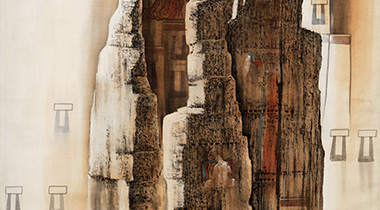
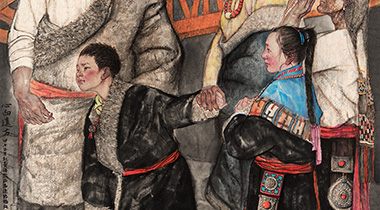
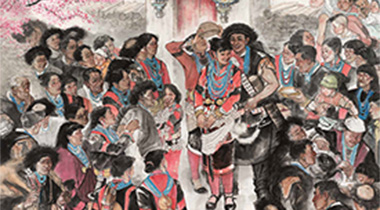
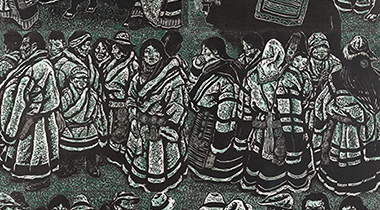
    The Lhoba people have lived in the mountains and valleys for generations as a primitive tribe in isolation from the rest of the world. However, they have gradually enjoyed a peaceful and prosperous life with the continuous improvement of Tibetan livelihood conditions since the People’s Republic of China was founded. This artwork depicts the festive and bustling wedding scene of the Lhoba people, showing their unique traditional folk customs.
    《Wedding of the Lhoba People》   Gao Yi Huang Huasan
  • http://images.china.cn/site1000/2021-11/06/9805a7aa-6aaf-4be9-8c46-928498e2a9a0.jpg
    The devout Tibetan Buddhists would not be hindered on their pilgrimage despite heavy traffic in the street. The artwork, with realistic techniques of ink painting and from a simple yet friendly perspective, reflects the on-going concurrence and even convergence of Tibetan traditions and modern creations in our era.
    《The Pilgrimage Road》   
  • http://images.china.cn/site1000/2021-11/03/f7a79e45-31b3-419a-a7b7-39fb1e4d08a5.jpg
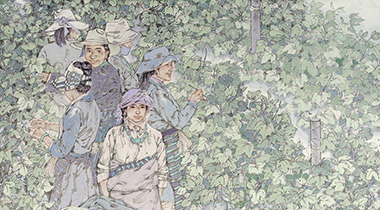
    There is a tradition of growing grapes and making wine in XizangTibet. The grape planting and wine brewing has been developed vigorously in recent years in the Yarlung Zangbo River Basin, as a “mellow” industry for local people to alleviate poverty and increase income. The painters created this artwork after deeply appealed by the strong flavor of local life and the vigorous spirit when witnessing Tibetans working in the vineyards in a new local ecological immigrant village.
    《Vineyard by the Yarlung Zangbo River》   Dong Congmin, Liu Wentao
  • http://images.china.cn/site1000/2021-11/03/f7ca5387-da93-489c-8eb9-83e5f42c9408.jpg
    Bian Ba, a Tibetan painter, returned to hometown many years ago after his study in inland China. Delighted at the development and progress in his hometown, he was also sensitively aware of the collision between traditional lifestyle and modern civilization. Therefore, he created a series of works with this theme after taking inspiration from childhood memory. Remote Landscape combines the modern art forms with the traditional Tibetan painting techniques of strong colors on canvas, achieving innovation in cultural connotation and artistic interest.
    《Remote Landscape》   Bian Ba
  • http://images.china.cn/site1000/2021-11/03/7f943022-b823-4e19-bdb5-5f67b91aa8c9.jpg
    The painter has been devoted to the art of XizangTibet for more than 40 years since arrival at XizangTibet in his youth. When he went across the Tanggula Mountain pass for the first time, the local Tibetans’ eyes were so innocent and their attitude so friendly, which left an indelible impression on him. The deep feelings still trickle down from his brushes onto the canvas .
    《At the Foot of Tanggula Mountain》   Han Shuli
  • http://images.china.cn/site1000/2021-11/03/993489d1-bef2-4216-b7e4-8a8c881e6a4f.jpg
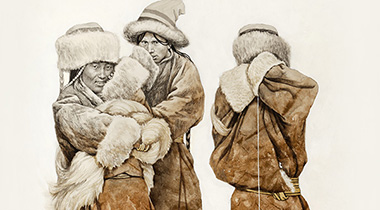
    New cConstruction is going on in Xizangthe new Tibet. The painter selects a typical family of Tibetan herdsmen, placing three generations against the background of the road and bridge construction sight. It is a set of sculptural group portraits. The characters in the artwork all look into the distance, thus showing their aspiration as well as prayers for an even better life in the future.
    《Heart to the Distance》   Huang Huasan
  • http://images.china.cn/site1000/2021-11/03/c887ee03-049a-4c52-9cd8-8f632d445e86.jpg
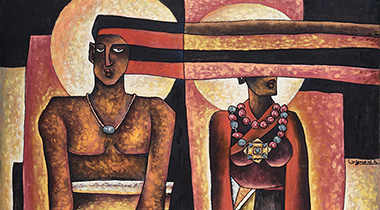
    The Kamba area of Tibet is characterized by picturesque scenery, simple folk customs and harmonious families. By means of decorative ink techniques, the painter depicts a Tibetan couple walking forward hand in hand. The strong shape and rough tones appropriately portray the romantic charm and spirit of the Kamba people.
    《The Kamba People》   Jimei Chilie
  • http://images.china.cn/site1000/2021-11/03/12747ab9-6a09-4c56-a208-d1dbc210a369.jpg
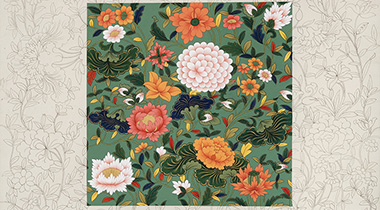
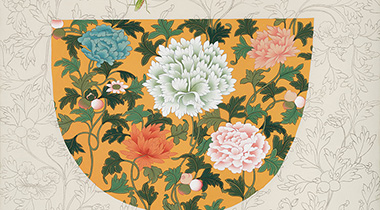
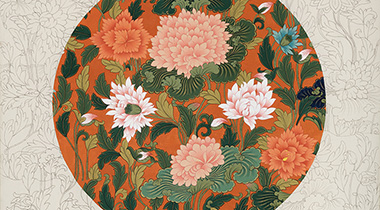
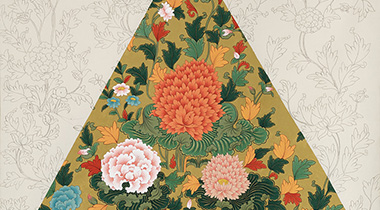
    Thangka is a religious scroll painting hung and worshiped after mounted with colored satin. As a painting form unique to XizangTibet, it has been passed down for more than a thousand years. With the traditional Thangka mineral pigments and painting techniques, the painter attempts to combine traditional Thangka art with modern decorative themes for innovation. The five-element (metal, wood, water, fire and earth) pattern of XizangTibet is used for reference to outline the flowers. The delineating modes in the background enrich the picture, expressing good wishes of auspiciousness and celebration, and conveying a mysterious and spiritual artistic effect.
    《Flowers in Four Seasons》   Laba Ciren

  • http://images.china.cn/site1000/2021-11/03/3d3dc857-5356-4eb6-9fe7-9e1f1c327976.jpg
    Thangka is a religious scroll painting hung and worshiped after mounted with colored satin. As a painting form unique to XizangTibet, it has been passed down for more than a thousand years. With the traditional Thangka mineral pigments and painting techniques, the painter attempts to combine traditional Thangka art with modern decorative themes for innovation. The five-element (metal, wood, water, fire and earth) pattern of XizangTibet is used for reference to outline the flowers. The delineating modes in the background enrich the picture, expressing good wishes of auspiciousness and celebration, and conveying a mysterious and spiritual artistic effect.
    《Flowers in Four Seasons》   Laba Ciren
  • http://images.china.cn/site1000/2021-11/03/ae58e3df-6301-4ba4-9666-59a1722de3e2.jpg
    Thangka is a religious scroll painting hung and worshiped after mounted with colored satin. As a painting form unique to XizangTibet, it has been passed down for more than a thousand years. With the traditional Thangka mineral pigments and painting techniques, the painter attempts to combine traditional Thangka art with modern decorative themes for innovation. The five-element (metal, wood, water, fire and earth) pattern of XizangTibet is used for reference to outline the flowers. The delineating modes in the background enrich the picture, expressing good wishes of auspiciousness and celebration, and conveying a mysterious and spiritual artistic effect.
    《Flowers in Four Seasons》   Laba Ciren
  • http://images.china.cn/site1000/2021-11/03/6a2895cb-2ef2-4e23-bea4-6758e7ef187a.jpg
    Thangka is a religious scroll painting hung and worshiped after mounted with colored satin. As a painting form unique to XizangTibet, it has been passed down for more than a thousand years. With the traditional Thangka mineral pigments and painting techniques, the painter attempts to combine traditional Thangka art with modern decorative themes for innovation. The five-element (metal, wood, water, fire and earth) pattern of XizangTibet is used for reference to outline the flowers. The delineating modes in the background enrich the picture, expressing good wishes of auspiciousness and celebration, and conveying a mysterious and spiritual artistic effect.
    《Flowers in Four Seasons》   Laba Ciren
  • http://images.china.cn/site1000/2021-11/03/4ec7e617-ab22-48c3-a96a-520c6f89cf29.jpg
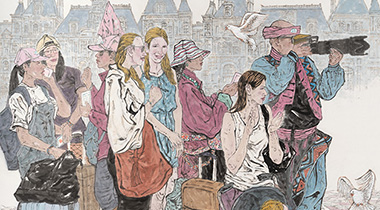
    The painter depicts Chinese tourists visiting the Plaza of the Town Hall in Paris, among whom, a Tibetan woman in ethnic costume inconspicuously stands. Just as all Chinese, now Tibetans are going abroad to embrace the world with an open mind and in a relaxed mood.
    《Go Abroad, See the World》   Li Shiming
  • http://images.china.cn/site1000/2021-11/03/fd5cb363-68ee-411d-8969-12438e92b131.jpg
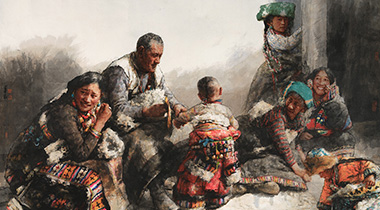
    The painter depicts an ordinary Tibetan family that he met when he was sketching in XizangTibet. All the family members, embalmed in joy, were relaxing in peace. The title of the artwork is derived from an old saying which represents the unworldly lifestyle in traditional Chinese culture as well as the simple and tranquil inner world of the Tibetans. The painter has tapped into Western painting techniques and made beneficial exploration with the rich presentation and expressive ability of brushes and ink of traditional Chinese paintings.
    《Dust》   Nan Haiyan
  • http://images.china.cn/site1000/2021-11/03/c8468e8c-16e6-403d-8231-3ca946f08213.jpg
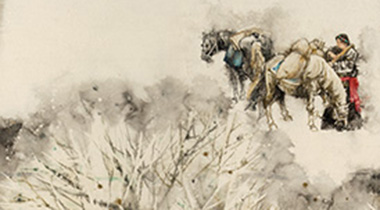
    Frost still hangs on the branches, yet the spring is unstoppable. A Tibetan girl is going afar with her luggage. The artwork is derived from the painter’s true feelings while he was sketching in the fields. The vast but solid backdrop of the Tibetans’ living environment is outlined and rendered with flexible but precise brushstrokes, variable ink colors and romantic techniques.
    《Cool Breeze and Emerald Green》   Qian Lei
  • http://images.china.cn/site1000/2021-11/03/291fb4a8-939d-4af3-8846-c2aa2ac65553.jpg
    The artwork shows the touching moment when a Tibetan youth joined the army and brought glory on his whole family. It has become a major event in a Tibetan family for one of its members to join the army in response to the call of the country. All the family members shall see him off with congratulations on the day of his departure. In this case, TV reporters also came to make interviews and record this festive scene.
    《Record》    Ren Huizhong
  • http://images.china.cn/site1000/2021-11/03/f716ae10-ed3a-432a-8253-c388ed9aa647.jpg
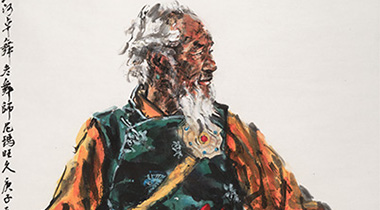
    The traditional Tibetan dance “Jiuhe Zhuo Wu” has a history of more than 1,300 years. Led by a respected old dancer, dozens of herdsmen sing and dance neatly and passionately at major festivals, in order to deter evil spirits and pray for auspiciousness. By virtue of rough and tough brushstrokes, the painter portrays the strong and vigorous image of an old Tibetan dancer.
    《An Old Dancer of “Jiuhe Zhuo Wu”》   Sheng Tianye
  • http://images.china.cn/site1000/2021-11/03/e7b1a054-b1a7-4494-a78f-347bec00f348.jpg
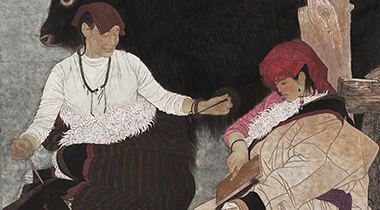
    The painter depicts a Tibetan mother and daughter twisting wool in the afternoon. It is the daily life of herdsmen in a peaceful and tranquil atmosphere. It allows people to realize that life is precious and ordinariness is the true philosophy, especially in the current COVID-19 pandemic situation. The artwork combines mineral colors with metal foil through exact delineation and enriched colors, showing the simple and honest lifestyle on the Qinghai-XizangTibet Plateau.
    《The Time》    Sun Zhensheng
  • http://images.china.cn/site1000/2021-11/03/87e9c34a-0243-42d1-9aba-36bc1745ed3f.jpg
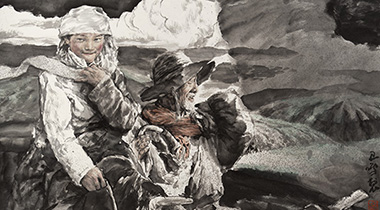
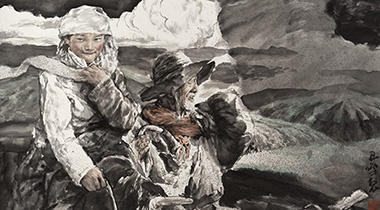
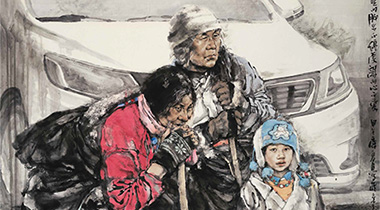
    Transportation in XizangTibet mainly relied on pack animals over thousands of years. Now the Qinghai-XizangTibet Railway, the highest and longest plateau railway in the world, has been built here, ushering Tibetans to a modern life. The artwork shows the nomadic journey of a Tibetan grandparent and his grandchild along the Qinghai-XizangTibet Railway, giving people a different feeling that “the heavenly road is no longer far away although the plateau is still there”.
    《The Heavenly Road》   Tian Weiming
  • http://images.china.cn/site1000/2021-11/03/cd6d3191-63f8-431a-aef4-26376e03c92a.jpg
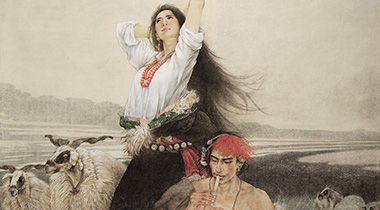
    Tanggula Mountain is located in the northeast of the Qinghai-XizangTibet Plateau. The immortal mountains and rivers here give birth to the simple beauty of the original ecology. The painter, with realistic techniques of strong-color ink painting, depicts a young Tibetan couple grazing in the wilderness. At sight of the brisk dance and the swinging hair in the air, we seem to able to hear the melodious music and feel the gentle wind in Tanggula Mountain. Their unique combination of both tough and tender temperaments allows the audience to come face-to-face with the splendor of a simple life.
    《The Wind in Tanggula Mountain》   Wang Mi
  • http://images.china.cn/site1000/2021-11/03/1f4c7397-e95a-4c65-9555-788a5b0a1398.jpg
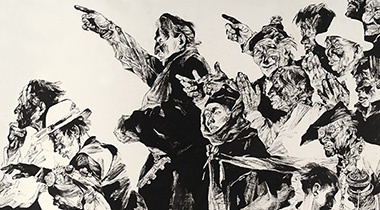
    The artwork depicts a live scene of Tibetans walking on a wide road. With the old and the young among them and well cared for, they walk briskly and happily. The painter highlights the images and dynamics of the characters with the scorching ink technique of traditional Chinese painting and with wide-spread black-and-white contrast, enhances the sense of movement in the picture with multiple combinations of characters, and thus showcases the perseverant, optimistic, and upward temperament of Tibetans.
    《A Wide Road》   Yin Huili
  • http://images.china.cn/site1000/2021-11/03/74ab0820-faa8-4873-9a2a-e4daaf9f3788.jpg
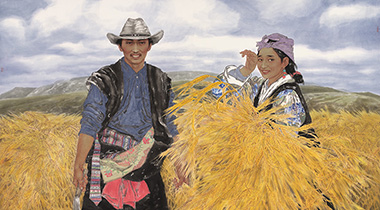
    Highland barley is a crop unique to Tibetan areas of China. The immense highland barley fields shine brightly in the sun in the harvest season. The painter depicts a Tibetan couple busily harvesting in the farmland. The magnificent plateau endows them with well-built bodies and cheerful temperament. The characters, while minutely depicted here and sketchily portrayed there, showcase the beauty of honest labor and simple life. The audience can feel the urge to share with them the joy of harvest and the outlook for a better future.
    《Golden Highland Barley》   Yu Wenjiang
  • http://images.china.cn/site1000/2021-11/03/bc41969e-2ed6-4853-83da-405ba039d49f.jpg
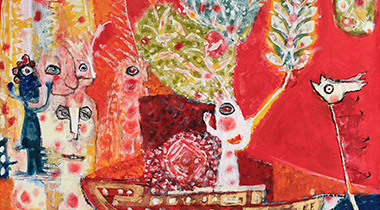
    The artwork, utilizing mixed materials as well as the methods of generalization, separation and transformation of human and the plant shapes, expounds the subjective impression of all things and creatures in nature, and shows the harmonious coexistence of the mankind and the nature. The painter, drawing lessons from Western painting styles and from modern configuration of components in the creation, expresses his strong self-consciousness with his unique personal touch and artistic language, and strives to open up new expression space for traditional Tibetan paintings.
    《Auspicious Birds》   Zhang Xixin
  • http://images.china.cn/site1000/2021-11/03/9d757825-64af-4588-aafe-f76d3ae30bd1.jpg
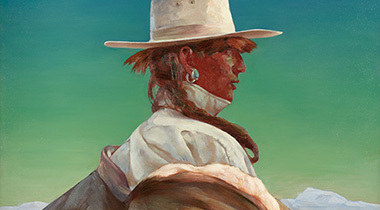
    The painter has traveled extensively in XizangTibet, and personally felt the Tibetans’ open-minded and optimistic attitude towards life. With a Tibetan man standing on the Ali Plateau as the theme, the artwork shows their persistence in revering the Heaven and defending the Pure Land for thousands of years. The painter strives to create a resolute and masculine Tibetan image with a dignified sense of portrait in terms of shaping techniques.
    《Holy Mountain · Guardian of the Plateau》   Cai Rong
  • http://images.china.cn/site1000/2021-11/03/13a5a6ad-fb07-4696-9e70-09df2012690a.jpg
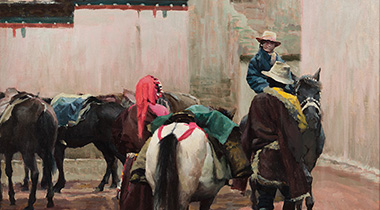
    A high-walled Tibetan post house stands to receive a group of tradesmen driving their packhorses. The plateau, just as the sea, connects the Ancient Chang’an - Tubo (now Xi’an - Lhasa) Road, the Ancient Tea-Horse Road, and the South Asian Corridor in history through the relay from one post house to another. By virtue of a realistic technique, the artwork guides the viewers to witness the profound cultural history of the “Southern Silk Road” on the Qinghai-XizangTibet Plateau.
    《Journey on the Plateau》   Chen Jian
  • http://images.china.cn/site1000/2021-11/03/d7ed7cdd-8668-44da-9424-72e26794915e.jpg
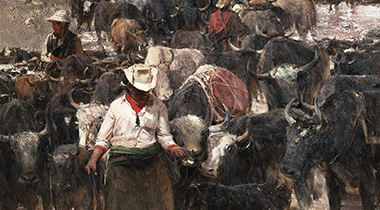
    Tibetan herdsmen seasonally change pastures in rotation. Migration, as a production method and a lifestyle that they have followed since ancient times, is based upon the wisdom of observing the laws of nature. The artwork, with a magnificent configuration of simple materials and elements, shows this long-standing custom and unique lifestyle of the Tibetans..
    《Charm of Xizang Tibet - the Migration》   Huang Shengxian
  • http://images.china.cn/site1000/2021-11/03/42a4a2ab-14aa-4278-bd9c-23af5fa4b29b.jpg
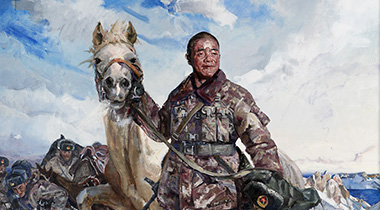
    In the 1950s, undaunted by hardship and sacrifice, the People’s Liberation Army (PLA) facilitated the peaceful liberation of XizangTibet. Over the past 70 years, it is these frontier soldiers that have built an unbreakable great wall on the frozen plateau with their passion and loyalty. They have earned the acclaim of being the steel backbone of the nation among the fellow countrymen. The artwork here, with solid brushstrokes and rich emotions, creates a monumental image of the Chinese soldiers.
    《Our Heroes》   Luo Tianxi
  • http://images.china.cn/site1000/2021-11/03/caece621-fc98-46a8-8e14-ba6c554519cf.jpg
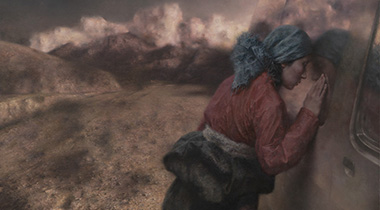
    A Tibetan woman is looking curiously into the van through the window. The mountains and the dirt roads are perpetually here, but the modern lifestyle represented by electric wires and vehicles is penetrating into the hinterland of the plateau, adding a new landscape to the vast skyline and thus greatly expanding the painter’s expression space.
    《Skyline》   Ma Lin
  • http://images.china.cn/site1000/2021-11/03/3ce9a559-2f02-45b8-93b2-002600203dcd.jpg
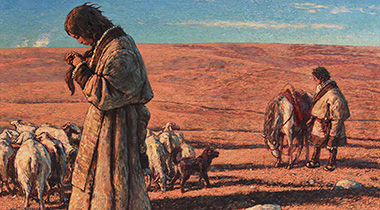
    The Qinghai-XizangTibet Plateau is ordained with strong colors. The brown mountains and the blue sky in the distance seem cold and mysterious, but the herdsmen and the flock add vitality to the backdrop of this enchanting melancholy. The painter portrays the unique plateau environment and the herdsmen’s serene mentality by means of the realistic techniques, allowing the audience to realize the poetic and divine nature in the ancient unity of human and the nature.
    《A Vast Valley Oil Painting》   Sun Jingbo
  • http://images.china.cn/site1000/2021-11/03/f04f7e11-7954-4e8c-a214-453b148e2503.jpg
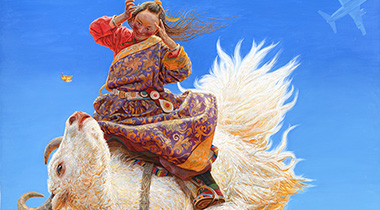
    As spring comes after winter, the ice on the plateau melts, the river gurgling, the bees flying and the butterflies dancing amongst flowers. A beautiful scene of spring is seen everywhere. With strong colors and unrestrained brushstrokes, the artwork offers praises to youth and life in this dynamic picture of a Tibetan girl and a happily-jumping white yak, thus conveying the painter’s sincere feelings for the Tibetan culture. Moreover, the plane flying across the sky vividly portrays Tibetans’ integration into modern life.
    《Harbinger of Spring》   Wang Yiguang
  • http://images.china.cn/site1000/2021-11/03/272a56f6-355b-4393-90ef-8bfa339f2d82.jpg
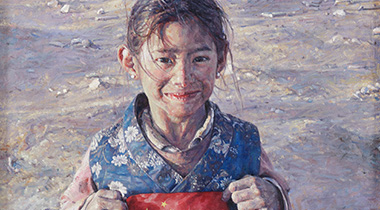
    On an early winter evening in Shigatse, XizangTibet, the painter encountered a group of children playing in the street, and then recreated this touching picture in his painting. This innocent little Tibetan girl, with exuberant excitement and pride on her smiling face, clasped the Five-Starred Red Flag onto her chest. China is the motherland of Tibetans, and the “Chinese Dream” is also a beautiful dream embraced by all Tibetan children.
    《The Chinese Dream》   Wu Yong
  • http://images.china.cn/site1000/2021-11/03/e079c5cc-8cdf-4a84-9589-682fa5822848.jpg
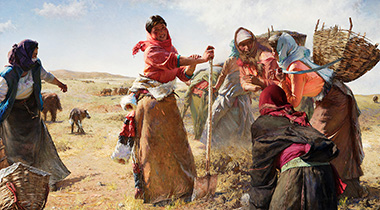
    The herdsmen pick up the dried cow dung ubiquitously seen in the vast Tibetan pastures for fuel. This economical and environment-friendly practice has lasted for thousands of years, showcasing the practical wisdom of the working people. Having drawn lessons from the expression and techniques of Western oil paintings, the painter focuses on the dynamic depiction of the characters, and renders the warm atmosphere of honest labor with bright colors.
    《Picking up Cow Dung》   Yu Ming
  • http://images.china.cn/site1000/2021-11/03/f7bf6ac6-be3c-47bd-aa69-db067a993064.jpg
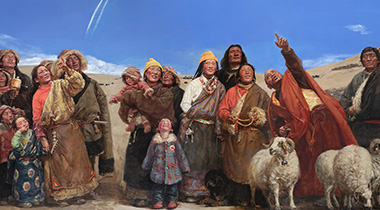
    The plane left a white trail in the azure blue sky over the plateau, which, shaped like a grand arch, attracted a group of Tibetans on their way to the market. They all looked up with marvel and excitement. By virtue of the classical realistic techniques of oil painting, the artwork captures the shocking moment when the ancient nomadic tradition encounters the modern lifestyle, reflecting the painter’s in-depth thinking about the question of ethnic character and the propositions of the times, as well as conveying Tibetans’ yearning for a better future.
    《Watching the Plane》   Yu Xiaodong
  • http://images.china.cn/site1000/2021-11/03/fe0409ea-7b5d-4c8f-8ec8-39d80216ac0c.jpg
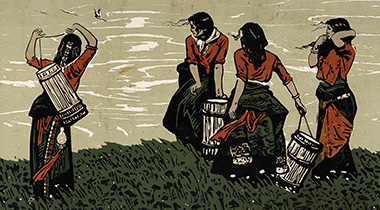
    Li Huanmin is a banner man in the history of Chinese print art and an outstanding artist emerging in the realism trend after the founding of the People’s Republic of China in 1949. His artistic career is inseparable from the Tibetan theme. This masterpiece, with a simple carving technique and unrestrained color scheme, focuses on a scene of team work by a group of Tibetan shepherdesses. These poetic figures reflect the joy of Tibetans after becoming masters of themselves through the democratic reform in XizangTibet, showing Tibetans’ free spirit and high morale after the liberation.
    《The Return of Wild Geese》   Li Huanmin
  • http://images.china.cn/site1000/2021-11/03/e21803dd-1a89-4499-b223-6cd733b2c8e4.jpg
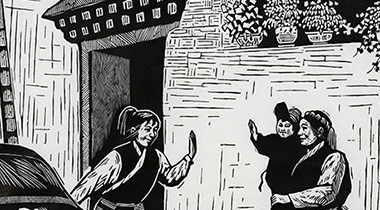
    The artwork depicts the daily scene of a Tibetan family. A young mother is about to drive to work and the grandma holds the grandson to see her off at the front door of their Tibetan house. With the economic development and improvement of the people’s livelihood in XizangTibet, the Tibetans are leading a well-off life with adequate food and clothing. It is no longer a rare sight to see Tibetans driving for a trip.
    《See You in the Evening, My Mother!》   Qijia Dawa
  • http://images.china.cn/site1000/2021-11/03/c61d55f7-bd2c-4774-894c-9d1aa7e62bfa.jpg
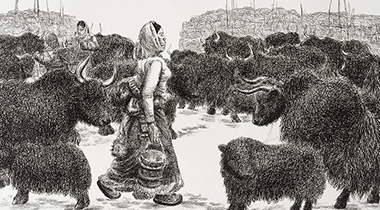
    The painter has travelled year in and year out into the hinterland of XizangTibet for sketching. He is good at vividly portraying humans and animals in the unique copperplate art language and in the composition of black and white space. This artwork depicts the daily hard labor of Tibetan herdsmen with rich emotions on life and great interests in composition, allowing the viewers to feel the simple and peaceful spiritual temperament of the people on the snow-covered plateau.
    《The First Snowfall on the Pasture》   Wu Changjiang
  • http://images.china.cn/site1000/2021-11/03/e702f0c4-fb69-40b6-95f6-ff0f6923de11.jpg
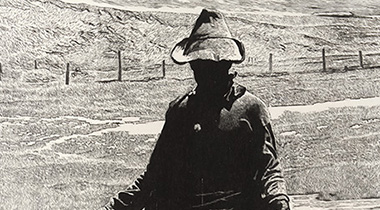
    The artwork, which is clear and vivid with a rich flavor of life, captures the scene of a shepherd driving the breeding sheep home, and outlines the typical image of the Tibetan herdsmen. In particular, the artist reproduces the strong contrast between brightness and darkness in the blazing sunlight on the plateau by fully utilizing the traditional black-and-white woodcut techniques, thus bringing an impressive visual impact.
    《Shepherd and His Sheep》   Xu Kuang
  • http://images.china.cn/site1000/2021-11/03/28257c81-8618-44d1-bfb0-0b11b16a7ced.jpg
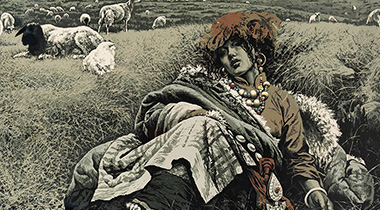
    The snowy plateau is vast, desolate and silent. A shepherdess is lying there for a rest. The artwork, with its simple and condensed colors, focuses on the tranquil atmosphere in the hinterland of the plateau. It creates a wide, far-reaching, yet delicate artistic feeling that diffuses into the vast and profound spiritual space, and thus produces a harmonious unity of natural beauty and the beauty of humanity.
    《Shepherdess on Amikuhu Mountain》   Yuan Qinglu
  • http://images.china.cn/site1000/2021-11/03/511c7518-c761-4cf2-9d62-c0221ca338e3.jpg
    The yak race is a festive scene on the prairie in northern XizangTibet. The bustling crowds are eagerly waiting for the herdsmen to ride on their sturdy yaks and start the race. The artwork is double-sidedly colored with the stippling techniques. And with the plump shapes and dark shades, the picture highlights the tough and valorous ethnic character of Tibetans.
    《Yak Race》   Zhang Shunqing
  • http://images.china.cn/site1000/2021-11/03/c9b5cbc5-ae21-401b-97c5-6132827ddb08.jpg
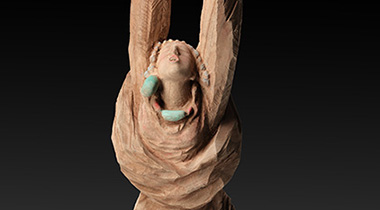
    Tibetans express their delight and gratitude to the Heaven with the traditional long-sleeve dance when celebrating the harvest. This woodcarving artwork captures the crucial moment when the Tibetan woman looks at the sky and throws up long sleeves. It conveys a strong sense of movement and an ample tension with the help of simple and tough lines.
    《Thunder Bolt》   Liu Jinting
  • http://images.china.cn/site1000/2021-11/03/1b46563c-4a2b-485d-96fd-fff35bdf449d.jpg
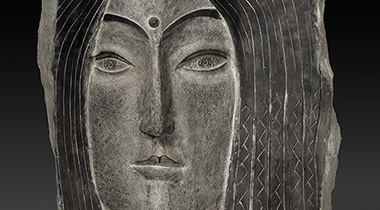
    “Dolma” is the Tibetan name for women, meaning a beautiful goddess. The artwork portrays the image of a Tibetan girl in a strong decorative style. She looks tranquil and charming with delicate braids. This image of “Dolma” does not refer to a specific person, but strives to represent the spiritual temperament of Tibetans as a whole.
    《Dolma》   Sheng Yang
  • http://images.china.cn/site1000/2021-11/03/57f54110-26aa-42da-a8c7-2aaec98b1c2e.jpg
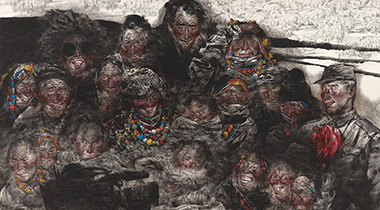
    Out of simple emotions and their reverence toward the gods, Tibetan pilgrims persist in walking around sacred mountains in silence. By undergoing such hardship of pilgrimage, they strive to strengthen their beliefs and pray for blessings. This group portrait shows the rituals and customs that have been passed down from generation to generation, conveying the awe-inspiring spiritual power of the crowds moving forward.
    《The Heavenly Road》   Zhang Zheyu
  • http://images.china.cn/site1000/2021-11/03/6307b362-dd6c-4999-a78e-c4c766fbba63.jpg
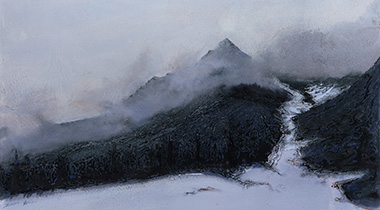
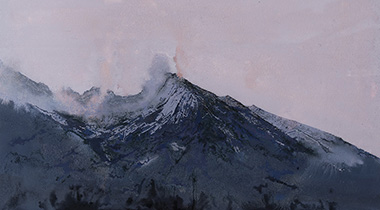
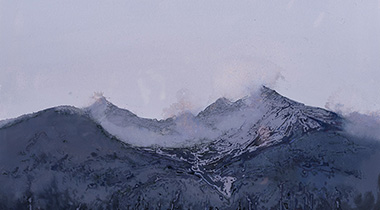
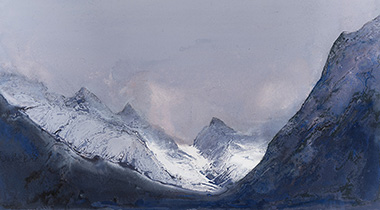
    The magnificent holy Mount Qomolangma towers in the wind and snow. It looks as if a goddess wearing a flying veil. The artwork captures the elegant connotations of Western paintings in combination with the ethereal Chinese ink paintings, poetically presenting the tranquil and transparent beauty of the plateau.
    《Landscape on the Plateau》    Lu Qinglong
  • http://images.china.cn/site1000/2021-11/03/dbe51e71-4107-4b8e-b675-8a607e5532ff.jpg
    The magnificent holy Mount Qomolangma towers in the wind and snow. It looks as if a goddess wearing a flying veil. The artwork captures the elegant connotations of Western paintings in combination with the ethereal Chinese ink paintings, poetically presenting the tranquil and transparent beauty of the plateau.
    《Landscape on the Plateau》    Lu Qinglong
  • http://images.china.cn/site1000/2021-11/03/920c7827-fd31-4d87-8f45-758ac3b04b6b.jpg
    The magnificent holy Mount Qomolangma towers in the wind and snow. It looks as if a goddess wearing a flying veil. The artwork captures the elegant connotations of Western paintings in combination with the ethereal Chinese ink paintings, poetically presenting the tranquil and transparent beauty of the plateau.
    《Landscape on the Plateau》    Lu Qinglong
  • http://images.china.cn/site1000/2021-11/03/23f9b953-8f4a-4eac-966d-c0bb34963b1f.jpg
    The magnificent holy Mount Qomolangma towers in the wind and snow. It looks as if a goddess wearing a flying veil. The artwork captures the elegant connotations of Western paintings in combination with the ethereal Chinese ink paintings, poetically presenting the tranquil and transparent beauty of the plateau.
    《Landscape on the Plateau》    Lu Qinglong
  • http://images.china.cn/site1000/2021-11/03/2f5a11a9-083a-4d4a-ab73-0a58b98e764d.jpg
    It is a daily work scene of Tibetan herders. The yak herds are scattered on the vast grassland in the bright and clear morning light, and the herders are milking the yaks for storage in tanks. Drawn in the rembrandt light with casual and delicate brushstrokes, the artwork produces a simple and dense texture like an oil painting, and expresses the profound metaphorical meaning that labor creates a better life.
    《The Morning on the Grassland》   Xiao Taosheng