• http://images.china.cn/site1000/2021-11/06/3bb42098-23f4-470b-84f2-9a8f3c859709.jpg
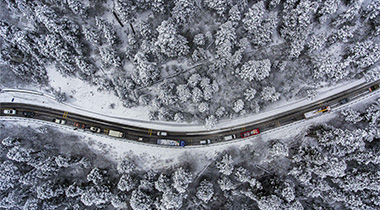
    This is the snow-covered road at the foot of the Segrila Mountain along China National Highway 318 (G318).
    G318 runs for 5,476 km from Shanghai to the Sino-Nepal Friendship Bridge. As the longest China National Highway, it is called the “landscape avenue of the Chinese”. Segrila Mountain is a landmark along the Sichuan- XizangTibet Highway towering 4,728 m, where pilgrims can be seen all the time.
    《Bird View of the Segrila Mountain Road》   Namgyal
  • http://images.china.cn/site1000/2021-11/06/c65bd811-b700-4db4-b685-c6b3632b29ac.jpg
    This photo is the China National Highway 219 (G219) in Ngari Prefecture of XizangTibet photographed in 2019.
    Formerly known as “Xinjiang-XizangTibet Highway”, the traditional G219 ran 2,140 kilometers. Since 1950, a total of 110,000 Chinese soldiers participated in the construction of this road, and more than 3,000 road builders lost their lives before it was completed 8 years later. It is the highest and probably one of the most challenging motorable roads in the world. In 2018, China decided to extend it with a design length of 10,065 km to connect northwest China’s Xinjiang and southwest China’s Guangxi via XizangTibet and Yunnan, making it the longest China National Highway once completed.
    《Highway in Ngari》   Huang Lunbin
  • http://images.china.cn/site1000/2021-11/03/c92b2f3b-d4c4-4b5d-b3c1-86c84a077603.jpg
    In 1981, a Tibetan family were watching television in black and white. In the 1980s, television was just beginning to become popular in XizangTibet, and it was a novel experience that a family or a group of villagers sit together sharing one television. When the show stopped at 10 p.m., the goodbye words on the television were also a signal for family members to say good night to each other and go to bed.
    《A Tibetan Family Watching Television》   Aduo
  • http://images.china.cn/site1000/2021-11/03/6e158191-6f69-44d1-b1e1-7663d81757ec.jpg
    In 2015, XizangTibet had already entered the information age in an all-round way and was making efforts to integrate the telecommunication network, the broadcast network and the Internet. People could request programs of their individual choices on television, computer or mobile phone to keep pace with the world. At that time, it was a new fashion for young people to gather at Internet pubs.
    《The Network Age》   Tenzin Xidan
  • http://images.china.cn/site1000/2021-11/03/05c7bff1-2b29-4628-8064-e4743f4d2c87.jpg
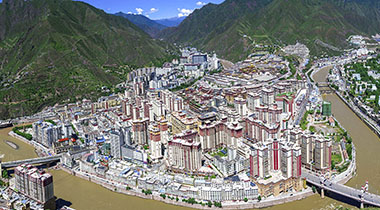
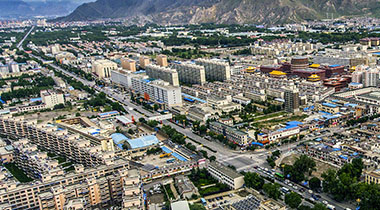
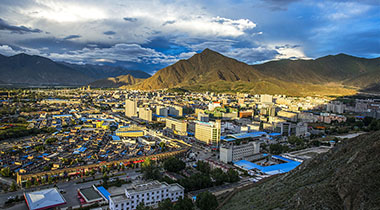
    As the eastern gate of XizangTibet, Qamdo is the place where the Sichuan-XizangTibet and Yunnan-XizangTibet railways must pass. Surrounded by mountains, Qamdo means “a meeting place of rivers” in Tibetan language. In fact, the Zachu River and the Angqu River converge here into the Lancang River flowing southward. During reign of the Tibetan State from the 7th to 9th centuries AD, here used to be the hinterland of the “Kingdom of Women”, where the female-centered social system and the unique custom of female worship once prevailed. In October 1950, Qamdo was liberated, half a year earlier than Lhasa. In 70 years, Qamdo’s regional GDP and its per capita income of residents in rural areas have all skyrocketed by over 500 times. Ngawang Jamcan, a local villager said, “As a descendant of serfs, I’m glad to be born in a new society. Every household in our village has a new house, with cars, motorcycles, TV sets and refrigerators. Mobiles, computers and household appliances can all be found in our village. Now our life is sweeter than honey.”
    《Bird View of Qamdo City, XizangTibet (part)Upper photo》   Qamdo Federation of Literary and Art Circles
  • http://images.china.cn/site1000/2021-11/03/f85a82d3-79a2-476e-bdea-1bd77b0e21bc.jpg
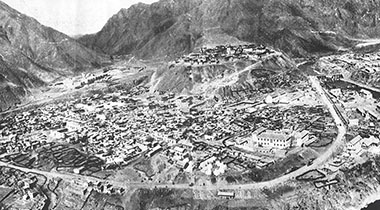
    As the eastern gate of XizangTibet, Qamdo is the place where the Sichuan-XizangTibet and Yunnan-XizangTibet railways must pass. Surrounded by mountains, Qamdo means “a meeting place of rivers” in Tibetan language. In fact, the Zachu River and the Angqu River converge here into the Lancang River flowing southward. During reign of the Tibetan State from the 7th to 9th centuries AD, here used to be the hinterland of the “Kingdom of Women”, where the female-centered social system and the unique custom of female worship once prevailed. In October 1950, Qamdo was liberated, half a year earlier than Lhasa. In 70 years, Qamdo’s regional GDP and its per capita income of residents in rural areas have all skyrocketed by over 500 times. Ngawang Jamcan, a local villager said, “As a descendant of serfs, I’m glad to be born in a new society. Every household in our village has a new house, with cars, motorcycles, TV sets and refrigerators. Mobiles, computers and household appliances can all be found in our village. Now our life is sweeter than honey.”
    《Bird View of Qamdo City, XizangTibet (part)Lower photo》   Ebo Tashi
  • http://images.china.cn/site1000/2021-11/03/df6595c3-7f2c-4bbd-ba6d-ac7f9c88d7de.jpg
    Jinzhu West Road is a main road extending more than 8 kilometers from east to west across Lhasa City. As a key project in celebration of the 40th anniversary of the founding of the XizangTibet Autonomous Region, the reconstruction and extension project of Jinzhu West Road was started in early December, 2004, and was completed and opened to traffic in late August, 2005, making it the widest urban road in XizangTibet, effectively alleviating traffic jams and greatly increasing the speed of urban traffic. It has also become a “Guest Avenue” to showcase the new look of Lhasa in the 21st century. In the 21st century, XizangTibet has made smooth progress in new-type urbanization, and an urban system with Lhasa at the center, various prefectures and cities as the pivot points and county seats and border towns as the grids has taken shape. In the future, urbanization will continue to be an important growth pole in Tibet’s economic and social development of Xizang, and more and more local people will benefit from the development of modern cities.
    《Jinzhu West Road of Lhasa (Upper photo)》   Nyima Tsering
  • http://images.china.cn/site1000/2021-11/03/18265839-ed65-4934-b5e3-f1b2ba896c2c.jpg
    Jinzhu West Road is a main road extending more than 8 kilometers from east to west across Lhasa City. As a key project in celebration of the 40th anniversary of the founding of the XizangTibet Autonomous Region, the reconstruction and extension project of Jinzhu West Road was started in early December, 2004, and was completed and opened to traffic in late August, 2005, making it the widest urban road in XizangTibet, effectively alleviating traffic jams and greatly increasing the speed of urban traffic. It has also become a “Guest Avenue” to showcase the new look of Lhasa in the 21st century. In the 21st century, XizangTibet has made smooth progress in new-type urbanization, and an urban system with Lhasa at the center, various prefectures and cities as the pivot points and county seats and border towns as the grids has taken shape. In the future, urbanization will continue to be an important growth pole in Tibet’s economic and social development of Xizang, and more and more local people will benefit from the development of modern cities.
    《Jinzhu West Road of Lhasa (Lower photo)》   Namgyal
  • http://images.china.cn/site1000/2021-11/03/08cb03b0-833f-4aa0-b066-1d178a3a4a0a.jpg
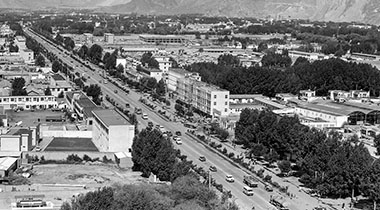
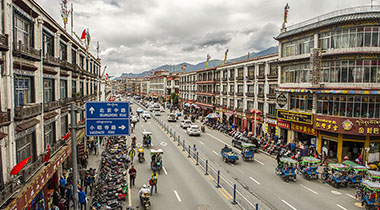
    Beijing Road in Lhasa is a central axis running from east to west, and it got this name for the assistance of Beijing in its original construction. As the busiest city avenue connecting the Barkhor Old Town and the Potala Palace, it not only records the past, but also witnesses the modern development and prosperity of the city, where traditional and modern elements exist in harmony with each other.
    《Middle Section of Beijing Road, Lhasa (Upper photo) 》   Che Gang
  • http://images.china.cn/site1000/2021-11/03/7b15746e-b1e7-48e2-8b04-7ea6a1099c9c.jpg
    Beijing Road in Lhasa is a central axis running from east to west, and it got this name for the assistance of Beijing in its original construction. As the busiest city avenue connecting the Barkhor Old Town and the Potala Palace, it not only records the past, but also witnesses the modern development and prosperity of the city, where traditional and modern elements exist in harmony with each other.
    《Middle Section of Beijing Road, Lhasa (Lower photo) 》   Namgyal
  • http://images.china.cn/site1000/2021-11/03/e00a2cc1-e67c-4898-91a9-bb5d6cb9dcf8.jpg
    Shannan City is at the south bank of the Yarlung Zangbo River, 191 km southeast of Lhasa. Tsetang is located at the central region of Shannan, which used to feature a harsh environment with inadequate community afforestation due to limited conditions. Since it was selected as one of the comprehensive pilot areas among the second batch of national new-type urbanization projects in 2015, Tsetang has made sustained efforts to renovate the living environment, afforest villages and plant trees, striving to be a “point man” in rural revitalization after attaining the goal of building a moderately prosperous society. “Green color is seen everywhere now. What I feel most is that the air is getting moist and there are more and more birds.” said a local resident.
    《Tsetang Town of Shannan City (part)Upper photo》   Ugen Tsering
  • http://images.china.cn/site1000/2021-11/03/1de03bc3-2f8e-499c-a1b6-fa47d1c79714.jpg
    Shannan City is at the south bank of the Yarlung Zangbo River, 191 km southeast of Lhasa. Tsetang is located at the central region of Shannan, which used to feature a harsh environment with inadequate community afforestation due to limited conditions. Since it was selected as one of the comprehensive pilot areas among the second batch of national new-type urbanization projects in 2015, Tsetang has made sustained efforts to renovate the living environment, afforest villages and plant trees, striving to be a “point man” in rural revitalization after attaining the goal of building a moderately prosperous society. “Green color is seen everywhere now. What I feel most is that the air is getting moist and there are more and more birds.” said a local resident.
    《Tsetang Town of Shannan City (part)Lower photo》   Namgyal
  • http://images.china.cn/site1000/2021-11/03/0b328492-e35b-4c83-bb31-cfa9b7a4f342.jpg
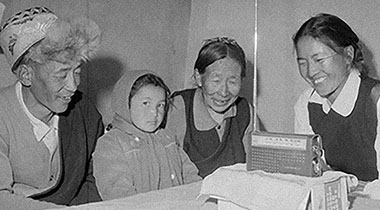
    In 1978, Champa Chonzom’s family were listening to the radio. In October 1953, Lhasa Cable Broadcasting Station, Tibet’sthe first broadcasting station in Xizang, started its official broadcasting. It was later renamed XizangTibet People’s Broadcasting Station, and its radio programmes were founded in 1959 and were broadcast in Tibetan and Chinese languages for 8 hours every day. By October 1961, radio broadcasting covered the whole autonomous region.
    《A Happy Family》   Nyima Tsering
  • http://images.china.cn/site1000/2021-11/03/4f586c41-47b7-487e-9529-3e2cf15cf39b.jpg
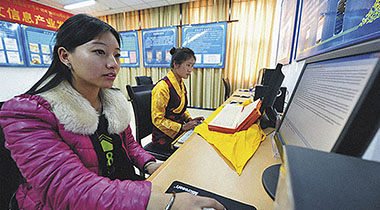
    In 2016, young Tibetans were studying ancient Tibetan books on computers. XizangTibet has increased efforts to build new-type schools that thoroughly integrate information technology with education and teaching, striving to build an educational informatization system where everyone has access to education anytime and anywhere. By July 2020, 92% schools in the whole autonomous region had broadband network access, 62% among the 957 primary and middle schools were equipped with multimedia terminals, and it was estimated that broadband would cover all the schools within one year. The number of information terminals per 100 students in the region was 8.22, a middle level nationwide. Thanks to the XizangTibet Education Cloud Platform, teaching and learning was not stopped when classes at schools were suspended during the spread of COVID-19 epidemic.
    《Information Age for Everyone》   Tenzin Xidan
  • http://images.china.cn/site1000/2021-11/03/f9388b87-ee53-462f-824b-4e83c724afe4.jpg
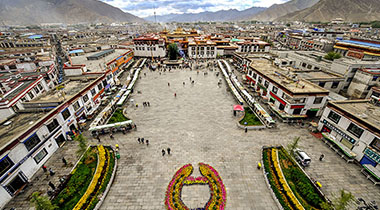
    The Jokhang is located at the center of Lhasa. The statue of Sakyamuni Buddha deified in the temple was brought by Princess Wencheng of the Tang Dynasty when she was married into XizangTibet. It was also because of this statue that Lhasa got its name (Lhasa literally means a holy land in the Tibetan language). Dating back to 647 AD, the Jokhang was eventually built into a complex the size of three and a half football fields after rounds of expansion in later dynasties, resulting in a blend of Tang dynasty, Indian and Nepalese styles. The Jokhang is a cultural symbol of Lhasa and is of paramount importance to Lhasa people. The wide square is at the western side of the temple, where tourists and pilgrims can walk around before entering the temple.
    《Square of the Jokhang Temple (Upper photo)》   Tashi Tse Ten
  • http://images.china.cn/site1000/2021-11/03/28dc7801-ea11-4655-9757-c51aa612970f.jpg
    The Jokhang is located at the center of Lhasa. The statue of Sakyamuni Buddha deified in the temple was brought by Princess Wencheng of the Tang Dynasty when she was married into XizangTibet. It was also because of this statue that Lhasa got its name (Lhasa literally means a holy land in the Tibetan language). Dating back to 647 AD, the Jokhang was eventually built into a complex the size of three and a half football fields after rounds of expansion in later dynasties, resulting in a blend of Tang dynasty, Indian and Nepalese styles. The Jokhang is a cultural symbol of Lhasa and is of paramount importance to Lhasa people. The wide square is at the western side of the temple, where tourists and pilgrims can walk around before entering the temple.
    《Square of the Jokhang Temple (Lower photo)》   Tenzin
  • http://images.china.cn/site1000/2021-11/03/dc0075fe-c3e3-42d1-9604-2bba7836aaf6.jpg
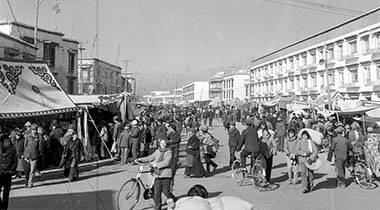
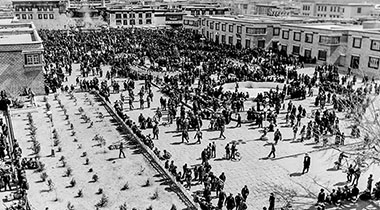
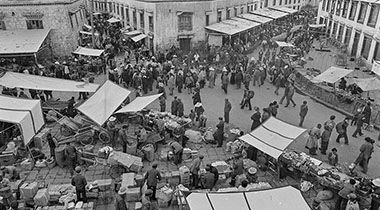
    The Tromzikhang Street is located in the downtown area of Lhasa and has been a famous commodity distributing center in XizangTibet since ancient times. A great variety of goods can be found here, ranging from bamboo shoots to dzi beads. This photo was taken in June 1985. At that time, some commodities were still traded in the way of “bargaining in the sleeves”.
    《Tromzikhang Street of Lhasa》    XizangTibet Daily
  • http://images.china.cn/site1000/2021-11/03/3e843bae-009b-4158-a619-5fc4ad0a62d1.jpg
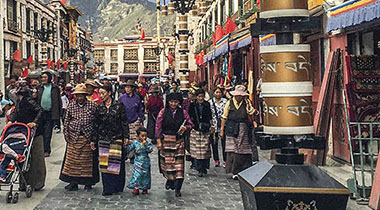
    Adjacent to the Tromzikhang market, the Barkhor Street emerged and developed along with the construction and expansion of the Jokhang. Having existed for 1,300 years with well-preserved old landscape, it is now a well-known circumambulation street and commercial area. This photo was taken in September 2016, showing a busy yet peaceful old street.
    《Barkhor Street of Lhasa》   Peng Wenling
  • http://images.china.cn/site1000/2021-11/03/bd41eb55-0be2-4d0e-8120-d981c006d15c.jpg
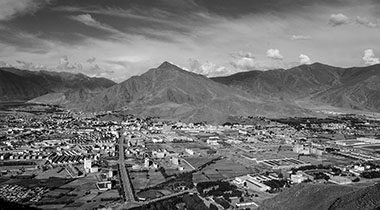
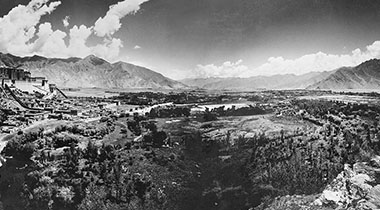
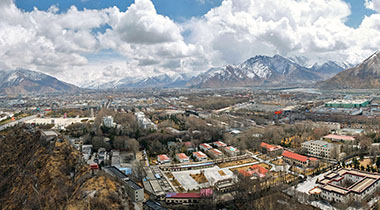
    Lhasa was designated as a prefecture in January 1960, and was made the administrative capital after the founding of the XizangTibet Autonomous Region in September 1965. Its urban center was expanded from 3 km2 to 77.9 km2 over the 40 years of reform and opening-up, having increased by 26 times. The permanent population of Lhasa in 2019 was 558,900, increased by 4,500 compared with that in 2018. The past decade witnessed a doubled income of Lhasa residents. Now, the development indicators of public services like basic public education, social insurance, medical care, public health and social services, culture and sports facilities have all reached the national average level.
    《Bird view of Lhasa (part) Upper photo》   Lan Zhigui
  • http://images.china.cn/site1000/2021-11/03/f6843110-35f0-4ce4-87d1-7b651451aa01.jpg
    Lhasa was designated as a prefecture in January 1960, and was made the administrative capital after the founding of the XizangTibet Autonomous Region in September 1965. Its urban center was expanded from 3 km2 to 77.9 km2 over the 40 years of reform and opening-up, having increased by 26 times. The permanent population of Lhasa in 2019 was 558,900, increased by 4,500 compared with that in 2018. The past decade witnessed a doubled income of Lhasa residents. Now, the development indicators of public services like basic public education, social insurance, medical care, public health and social services, culture and sports facilities have all reached the national average level.
    《Bird view of Lhasa (part) Lower photo》   Zhadun
  • http://images.china.cn/site1000/2021-11/03/99785b6b-3d13-4455-ab44-199fab7b9040.jpg
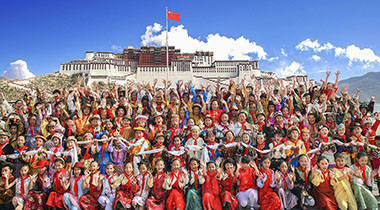
    In old XizangTibet, serfs, who made up 95% of the population, had no access to education, and there was an illiteracy rate exceeding 95% among young and middle-aged adults. Since the peaceful liberation, XizangTibet has been making efforts on developing modern education for all. Now it boasts an all-level education system that covers kindergarten, elementary education, vocational education, higher education, adult education and special education. As of 2020, there had been 2,995 schools of all levels, including 7 general institutes for higher education, 11 secondary vocational schools, 136 middle schools, 821 primary schools, 6 special schools and 2,014 kindergartens. The joyful children in the photo were from Lhasa No.1 Primary School, the earliest public primary school in Lhasa built in 1952, which is only 1 km from the Potala Palace.
    《In the Bright Sunshine》   Somaini

  • http://images.china.cn/site1000/2021-11/03/1ccf2172-fe42-49e5-aa8b-1ca6a8bfb9cd.jpg
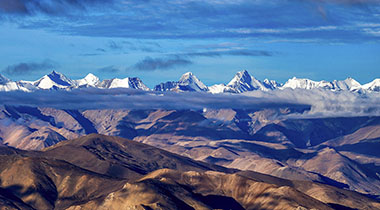
    This is a group portrait of “peaks on the plateau” photographed in June 2018. On the sightseeing platform of Pang-la Pass, we can see Makalu, the 5th highest mountain in the world at 8,463 m, Lhotse, the 4th highest at 8,516 m, Qomolangma/Mount Everest, the highest at 8,844.43 m, and Cho Oyu, the 6th highest at 8,201 m, successively from left to right.
    《The Call of the Holy Mountains》   Ji Tao
  • http://images.china.cn/site1000/2021-11/03/c0ec342c-c76f-473c-ab50-c97c619a203a.jpg
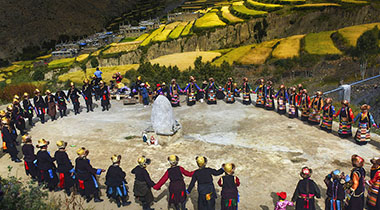
    This photo was taken in Sabu Village, Shannan City, XizangTibet, on August 24, 2017. July 17th is the annual Wangguo Festival (Ongkor Festival) to celebrate harvest according to Tibetan lunar calendar, which is often celebrated by dancing, yak racing and tug-of-war, etc. In 2014, it was included on the National List of Intangible Heritage of China. Tibet’s The agriculture in Xizang has kept a good momentum of steady growth over the past five years, with a grain output at more than one million tons. In 2020, the output of highland barley, number of fattened yaks and the total output value of agricultural and livestock products processing industry were increased by 12.2%, 25.2% and 100%, respectively, compared with those at the end of 2015. With bumper harvests, the festive atmosphere of the Wangguo Festival is becoming stronger year by year.
    《The Joy of Harvest》   Tenzin Lobsang
  • http://images.china.cn/site1000/2021-11/03/f1001c78-9955-4bd1-89c5-fbb825fe92db.jpg
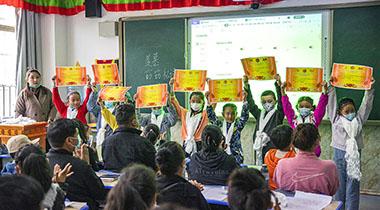
    In July 2020, a parents’ meeting was held on the Dongcheng Campus of Lhasa Experimental Primary School to award certificates of merit to outstanding students. The new era has witnessed educational development in big strides in XizangTibet. In 2013 and 2014, Tibet’s educational financial the fiscal investment for education in Xizang was 11.8 billion yuan and 13.5 billion yuan, respectively. While ensuring the basic access to education, XizangTibet also made efforts to optimize educational resources to achieve all-round development of human beings. Now, educational ideas like family-school cooperation, positive incentives and well-rounded education first have been widely adopted.
    《Parents’Meeting at a Primary School of Lhasa》   Xian Yunqiang
  • http://images.china.cn/site1000/2021-11/03/78df5adf-3780-4a0a-99e6-24a33595e6e0.jpg
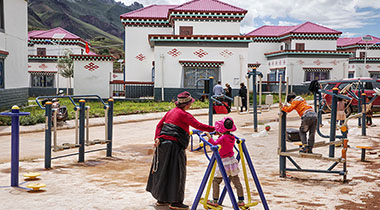
    This photo was photographed in Jinka New Village of Qamdo in eastern XizangTibet on August 1, 2020. Qamdo used to be in extreme poverty. In the final and decisive battle to eradicate poverty, Qamdo has built a total of 268 new relocation sites equipped with infrastructure such as water, electricity, road, network, education and medical service since 2016. Jinka New Village was completed in 2017. For the 35 households there, the building area of each new house is 130 m2, with a construction cost of 270,000 yuan, in which 100,000 yuan is subsidized by the government. For newly-built villages like Jinka, public fitness equipment comes as a “standard configuration”.
    《Physical Exercise》   Xian Yunqiang
  • http://images.china.cn/site1000/2021-11/03/d5080e01-3a07-4be2-811f-1d608eb2d6c2.jpg
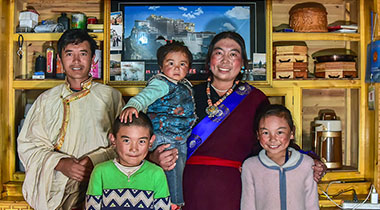
    This photo was photographed in Riwoche Town of Qamdo in 2020. In recent years, a total of 99,000 people from registered poor households have moved out of the mountainous areas and into new houses. Phurbu Drolma and her family are also among them. Depending on the crafts in architectural ornament of her husband Jiangpei Shengge, the couple cooperated with several neighbors and contracted the house decoration of surrounding villagers. Being able to seek employment locally, they are now living a happy new life.
    《The Happy Life of Phurbu Drolma and Her Family》   Cho ·Tenzin Choephel
  • http://images.china.cn/site1000/2021-11/03/31f4a515-eb96-4323-930f-9183083d230a.jpg
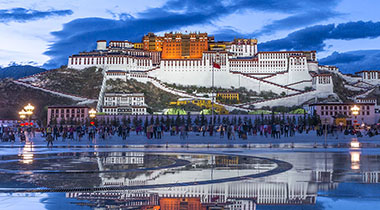
    This photo was taken in June 2018. With the evening lights lit, the Potala Palace was reflected in the water left by the musical fountain at the Square. Standing for more than 200 meters high on a hill at the northwestern outskirts of Lhasa, the Potala Palace is a symbol of Lhasa and XizangTibet. Songtsan Gambo, ruler of the then Tubo Kingdom, had the Potala Palace built for Princess Wencheng of the Tang Dynasty, whom he was soon to marry. With a history of 1,390 years, it used to be the political center of XizangTibet, and now it is a museum of rich collections, as well as a holy land for religion and art. It was inscribed on the World Heritage List in 1994.
    《Reflection of the Potala Palace》   Ji Tao
  • http://images.china.cn/site1000/2021-11/03/42642753-130c-43e7-abe9-371a32877081.jpg
    This photo was taken in Tingri County of Xigaze City on April 22, Xigaze is about 200 km west of Lhasa. Tingri County is home to 4 peaks above 8,000 m, including Qomolangma. Despite the beautiful landscape of high mountains and long rivers, life is not easy for local residents. The low annual average temperature (only about 3℃) greatly limits the development of agriculture and animal husbandry. Since 2015, Tingri County has been developing the “Qomolangma Eco-Cultural Tourism Piloting Model Zone” and other major industrial projects including lamb farms, vegetable greenhouses and ethnic handicraft industry parks. As a result, the whole county had shaken off poverty by the end of 2019.
    《Leisure》   Ngawang Lobsang
  • http://images.china.cn/site1000/2021-11/03/3a3f9117-f5f2-4f59-8b85-4e2c7adddc20.jpg
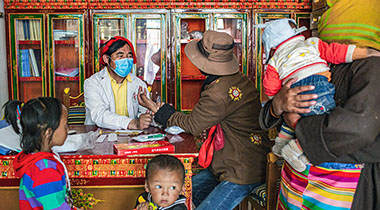
    On August 7, 2020, a doctor in the Baingoin County of Nagqu in northern XizangTibet was feeling the pulse of a patient. Baingoin is a pilot site of county-township integration reform for medical institutions in Nagqu, with the aim that herdsmen can enjoy quality medical services locally, where mild and moderate cases can receive medical treatment at township-level and county-level medical institutions respectively.
    《A Small Town Doctor》    Liu Lei
  • http://images.china.cn/site1000/2021-11/03/0af62b62-6d21-4f81-bed5-ebc1c37ee080.jpg
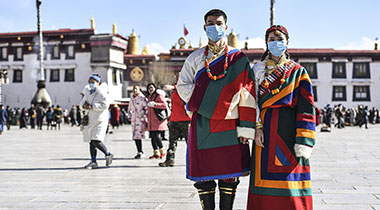
    On January 26th, 2020, the second day of the Chinese New Year, a newly-wed couple travelling in XizangTibet was posing for a photo at the Jokhang Temple Square in Lhasa. There were already COVID-19 cases in Wuhan then. Four days later, the National Health Commission reported theTibet’s first confirmed case in Xizang on January 29th, 2020. The patient went to XizangTibet by train from Wuhan and has already recovered. To date, XizangTibet has had only one confirmed case and one recovery.
    《An Extraoridnary Wedding Photo》   Phuntsok Wangdu
  • http://images.china.cn/site1000/2021-11/03/4f1f35ab-27de-452c-a07c-a7d718833ee3.jpg
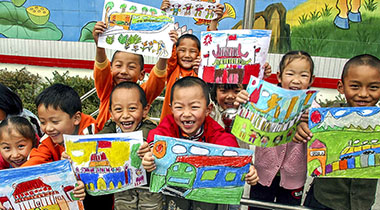
    In Lhasa Experimental Kindergarten, the teacher asked kids, “what’s the most familiar image to you? Let’s paint it.” Many kids painted the Tiananmen and the Qinghai-XizangTibet Railway. Red, yellow, blue, green, white… The images in the hearts of the kids are simple, vivid and with rich connotations.
    《The Tiananmen and the Qinghai-XizangTibet Railway in My Heart》   Yao Haiquan
  • http://images.china.cn/site1000/2021-11/03/dbd937bd-53b6-45ae-937b-938faa10fecb.jpg
    On June 22, 2010, graduates of Grade 2005 majoring in preventive medicine in Medical College of XizangTibet University were taking a group photo at the Polata Palace Square to mark their graduation by throwing the graduation caps into the sky. Established in 1972, the college has altogether cultivated thousands of Tibetan medical talents. In February 2020, General Secretary Xi Jinping replied a letter from 17 students who were interning at Peking University Shougang Hospital in Beijing, encouraging them to go to places where they were most needed after graduation and work for the wellbeing of the people, particularly those of local communities.
    《Graduation!》   Phurbu Tashi
  • http://images.china.cn/site1000/2021-11/03/55faf34c-9a85-4df8-bf21-3d734463dd8e.jpg
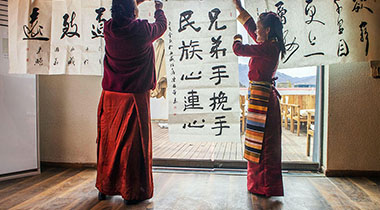
    On October 24, 2019, two women were hanging calligraphy works in the Diki B&B Resort of Lhasa. “Dejizangjia Inn”, a Tibetan style hotel, is a specialty tourism and B&B village built on basis of poverty alleviation relocation, and has now become a must-go site famous on the Internet. In addition to creating local jobs, tourism has also promoted cultural exchange. Many Tibetans are learning Chinese calligraphy to express their feelings and ideas as well as to decorate their houses with artworks.
    《Calligraphy Exchange》   Liu Yingyi
  • http://images.china.cn/site1000/2021-11/03/27608bbe-4b18-4f79-a651-783c9b7ed29a.jpg
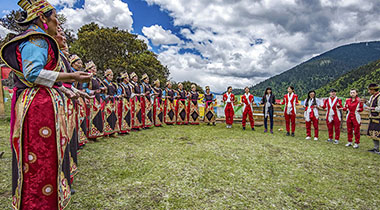
    During the “Peak Dream - Auto & Go Chess Rally” in 2017, women in the Zhaxigang Village of Nyingchi in eastern XizangTibet dressed up to welcome female racing drivers from afar. The Auto & Go Chess Rally is an event to boost Tibet’s tourism in Xizang. With Tibetan Plateau as the main venue, the event perfectly combines in-door intelligence competition and out-door auto contest.
    《Welcoming the Guests》   Ngawang Rinchen
  • http://images.china.cn/site1000/2021-11/03/02331ee9-d53b-4440-b480-db45ec0468b5.jpg
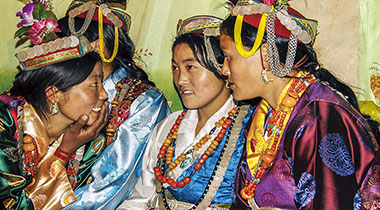
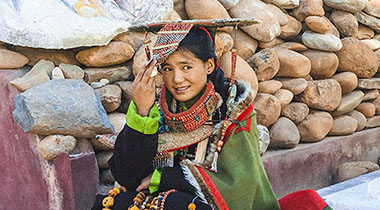
    Sherpas (which means “people from the east” in Tibetan) have lived for generations in the ravines of the Himalayas, where supplies in and out should all be carried on the back of porters, including women porters. Small-scale frontier trade has been encouraged there since reform and opening-up, turning Tibetan sherpas from “Himalaya porters” into bosses of foreign trade between China and South Asia.
    《Sherpa Women》   XizangTibet Photographers Association
  • http://images.china.cn/site1000/2021-11/03/9499cafa-8c5f-4899-9a81-404fe9aad1e8.jpg
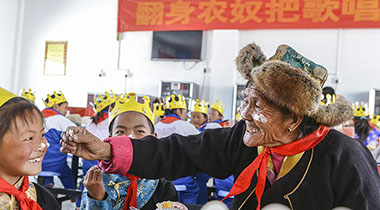
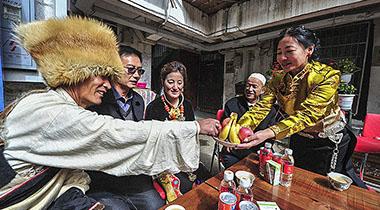
    This photo was taken on March 26th, 2014. Students from Gangdui Central Primary School of Shannan Prefecture of XizangTibet were sharing a birthday cake with 64-year-old grandma Droma Lahm. They sang and danced to celebrate the Commemoration Day for the Liberation of One Million Serfs in XizangTibet on March 28th. Grandma Droma Lahm was born in a serf family and lived a miserable life with little material comfort. On March 28th, 1959, serfdom in XizangTibet was put to an end, and this day was regarded as another “birthday” by her and many other Tibetans. It was established as the Commemoration Day for the Liberation of One Million Serfs in XizangTibet on March 28th, 2009.
    《Birthday》   Jueguo
  • http://images.china.cn/site1000/2021-11/03/1a84bf11-8fb0-4826-9e55-a7e06c1366dc.jpg
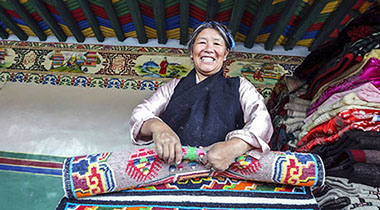
    A local Tibetan in Gyangze County of southern XizangTibet was organizing the Tibetan cushions and backrests in her new house. Hand knitting, agriculture and animal husbandry are the three major traditional industries in XizangTibet. Knitting machines and spindles can be found in almost every household. XizangTibet has made positive efforts to expand market of ethnic handicraft industry, boost regional economic development and increase people’s income, and the past five years have witnessed a double-digit market growth.
    《Our Colorful Homeland Weaving》   Tenzin
  • http://images.china.cn/site1000/2021-11/03/97efe571-82f0-4526-a577-de611edadfa1.jpg
    This is a Ngari girl in Tibetan clothing. Today, many Tibetans wear modern dresses like suits and jackets in daily life. But they still dress up in their traditional clothes on festivals.
    《A Tibetan Girl》   Peng Wenling
  • http://images.china.cn/site1000/2021-11/03/ae602522-f25e-44fe-8cf3-22eaa130dae5.jpg
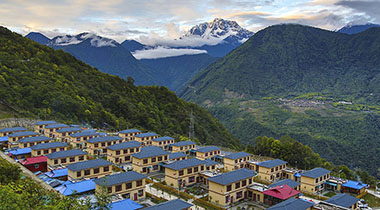
    This photo taken in 2020 shows the new look of Zhucun Village. Zhucun Village was originally located on a steep mountain slope, which was quite inconvenient for local people’s life. The poverty alleviation relocation project of the village was completed by the end of 2018. Built on two manually excavated platforms, the new village now accommodates 56 households of 232 residents.
    《New Look of Zhucun Village》   Zhaluo
  • http://images.china.cn/site1000/2021-11/03/0fdb4493-b962-4533-b8da-0fad45900b2a.jpg
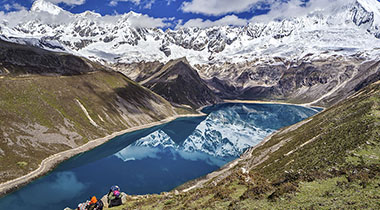
    This photo was taken at the Baimalincuo Lake in June 2018. Lying in middle XizangTibet, Baimalincuo is a mysterious lake hiding deep in the Himalayas which appears in blue, green and white as it mirrors the surrounding landscape. Surrounding the lake is the snow-capped holy Mt. Kula Kangri with three peaks towering as high as 7,538 m.
    《Baimalincuo Lake》   Ji Tao
  • http://images.china.cn/site1000/2021-11/03/e9762cc2-fe0a-48d0-8922-b0bff7ad996d.jpg
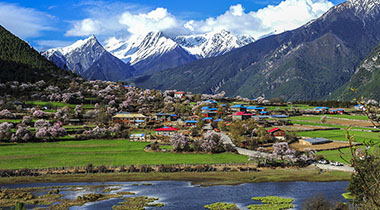
    This photo was taken at the Galang Village of Nyingchi in 2012. The Galang Well-off Model Village built with more than 5 million yuan funding by Guangdong Province was completed in 2007. As stated by General Secretary Xi Jinping, lucid waters and lush mountains are invaluable assets. The village was rated as a national eco-cultural village in 2010. There were 15 households running family inns with an annual income of more than 100,000 yuan per household. And the per capita annual income of the village was more than 16,000 yuan in 2018.
    《An Idyllic Village by the Snowcapped Mountain》   Zhaluo
  • http://images.china.cn/site1000/2021-11/03/21ab90fe-85ab-4db5-b115-2218bc6a0a4e.jpg
    This is Dadong Village in Lhasa City photographed in 2018. With progress being made in poverty alleviation, poverty-stricken families in the village had been basically lifted out of poverty by this year. Villagers opened the Dadong Resort, a model site of poverty alleviation and tourism development. Based on the well-preserved ancient village and ecology, residents have increased their income through tourism projects.
    《Dadong Resort》   Zhadun
  • http://images.china.cn/site1000/2021-11/03/7787dbbc-a62d-4f1f-9439-46490264e34c.jpg
    Villagers put on their festival costumes to celebrate the spring ploughing day and pray for a good harvest. In order to ensure the work of spring ploughing and sowing of 384 km2 cropland in 2021, Lhasa city prepared chemical fertilizers, pesticides, and quality seeds, and sent agricultural technicians to villages to provide agricultural science and technology services.
    《Traditional Spring Ploughing Ceremony in XizangTibet》   Ngawang Lobsang
  • http://images.china.cn/site1000/2021-11/03/abe79250-d308-4cd6-b607-7faf0fd6c328.jpg
    Residents in Jixiang Siji Village of Lhasa were hanging the “Fu” (meaning blessing and good fortune) character at the door of their houses to celebrate the coming New Year at the end of 2017. Through the poverty alleviation relocation project, villagers moved to new houses and have found new jobs such as plant nursing and cow farming in the newly-built National Modern Agriculture Model Zone and Lhasa “Pure Land” Health Industrial Park nearby. They are working hard to create a better life. “Thanks to the good policies of the CPC, they have built new houses for us and even provided furniture. Water and electricity are also available. We are living a very happy life.” said a villager.
    《Celebrating the New Year》   Yao Haiquan
  • http://images.china.cn/site1000/2021-11/03/9e9fa999-0a35-4bd3-8da7-c6e9eb1316e2.jpg
    Tibetan famous artist Thubten was performing Epic of King Gesar. Epic of King Gesar is a thousand-year-old heroic legend created by the Tibetans. With an open structure and 400,000 lines of verse recorded in written, it is considered the longest epic in the world and an encyclopedic masterpiece that reflects the social and cultural landscape of ancient XizangTibet. As a form of folk art blending ballad telling and singing, it is most popular in Tibetan-inhabited areas such as Qinghai, Sichuan and Gansu. Through inheritance and innovation, its content has been enriched from generation to generation.
    《Performance of the Epic of King Gesar》    Rinai
  • http://images.china.cn/site1000/2021-11/03/248b7c0d-390a-48c6-a0c5-b887fa4d3269.jpg
    Tibetan, Han and Hui people were gathering to celebrate Losar, the New Year according to Tibetan lunar calendar, at the Ethnic Unity Courtyard in Lhasa. Losar gets celebrated from the first day of the first month of the Tibetan lunar calendar and lasts for fifteen days, during which people hold diversified activities to extend the joy of autumn harvest and express the longing for the coming spring ploughing. Losar has already been included on the National List of Intangible Heritage of China. In recent years, Losar is celebrated in more ways, such as pasting the couplets, eating dumplings and making New Year calls on phones or Internet. Some Tibetan families choose to travel to other places in China during the festival.
    《Gathering on A Sunny Day》   Tenzin Xidan
  • http://images.china.cn/site1000/2021-11/03/af0ada89-b7f3-4adc-89dd-feff4f9a7e8d.jpg
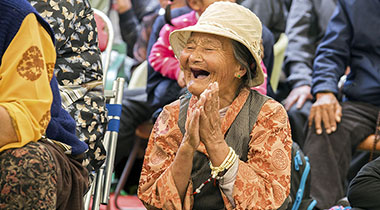
    On August 15th, 2017, an elderly grandma in Cijuelin Village of Lhasa was happily watching a show. The “Literature and Art Going to the Countryside” project is well received among rural residents. Performers include both professional actors, artists from folk art troupes as well as inheritors of intangible cultural heritage. By making real stories of local farmers and herdsmen into songs, dances, short acts and cross talks, they present a “cultural feast” to the residents. A total of 7,365 rounds of such performance were staged in 2019.
    《Watching the Show》   Xiao Yong
  • http://images.china.cn/site1000/2021-11/03/dcc99d39-77cb-4d13-bd85-e3a2c94e8842.jpg
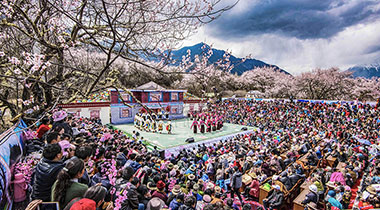
    In 2018, farmers and herdsmen from ten villages and towns of Bome County in Nyingchi put on festival costumes to take part in the Peach Blossom Festival. Nyingchi prefecture features a picturesque natural landscape. To attract tourists, locals held the first Nyingchi Peach Blossom Festival in 2002. The annual festival has now become a symbol of Nyingchi tourism. XizangTibet has been working on developing tourism and cultural industries. More than 40 million tourists from home and abroad visited XizangTibet in 2019, creating 56 billion yuan of tourism revenue. Affected by COVID-19 last year, the city debut the beautiful scenery of peach blossoms through livestreaming. The online views of such livestreaming hit 30 million in total.
    《Peach Blossom Festival in Tibetan》   Ngawang Rinchen
  • http://images.china.cn/site1000/2021-11/03/1eada1e4-df58-4ec9-9ccf-11dcfa7c1a16.jpg
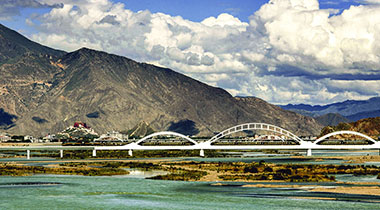
    On July 1st, 2006, the second phase of the Qinghai- XizangTibet Railway, linking Golmud to Lhasa, began commercial operation, making the Lhasa River Railway Bridge a new landmark on this “Heavenly Road”. The construction of this 1,142-kilometer section was a challenging project. 960 kilometers is above the altitude of 4,000 meters and 550 kilometers of track is laid on permafrost. Despite all these difficulties, this project is of great strategic importance, as it has effectively put XizangTibet and Lhasa on the “fast-track” to catch up with the times.
    《A Train Running on the Lhasa River Railway Bridge》   Yuan Ruilun
  • http://images.china.cn/site1000/2021-11/03/01672456-8698-4f62-b6c4-cbd418032656.jpg
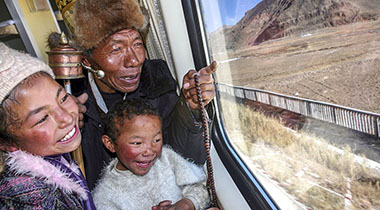
    It was the first time for 69-year-old Zhaluo to leave his mountainous hometown in Shannan. He was going to Beijing with his grandson and granddaughter by train. They were amazed by the high speed and caught by the scenery outside the window. The Qinghai-XizangTibet Railway has shortened the travel time from Lhasa to Beijing to less than 41 hours across a long distance of 3,500 km.
    《Taking the Train to Beijing》   Yao Haiquan
  • http://images.china.cn/site1000/2021-11/03/0be4e1ac-89ae-46d5-999f-d784324385f6.jpg
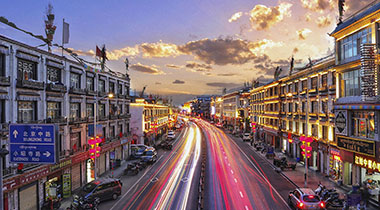
    This photo taken in 2018 shows the Middle Section of Beijing Road in Lhasa of XizangTibet. Beijing Road, Ramoche Road and Barkhor Street constitute the busiest commercial and cultural district in Lhasa. The busy traffic and the brightly-lit streets make up a bustling cityscape. We believe that Lhasa as well as XizangTibet will have a even more splendid future in the new era.
    《Leading to the Future》   Zhang Zhenhua